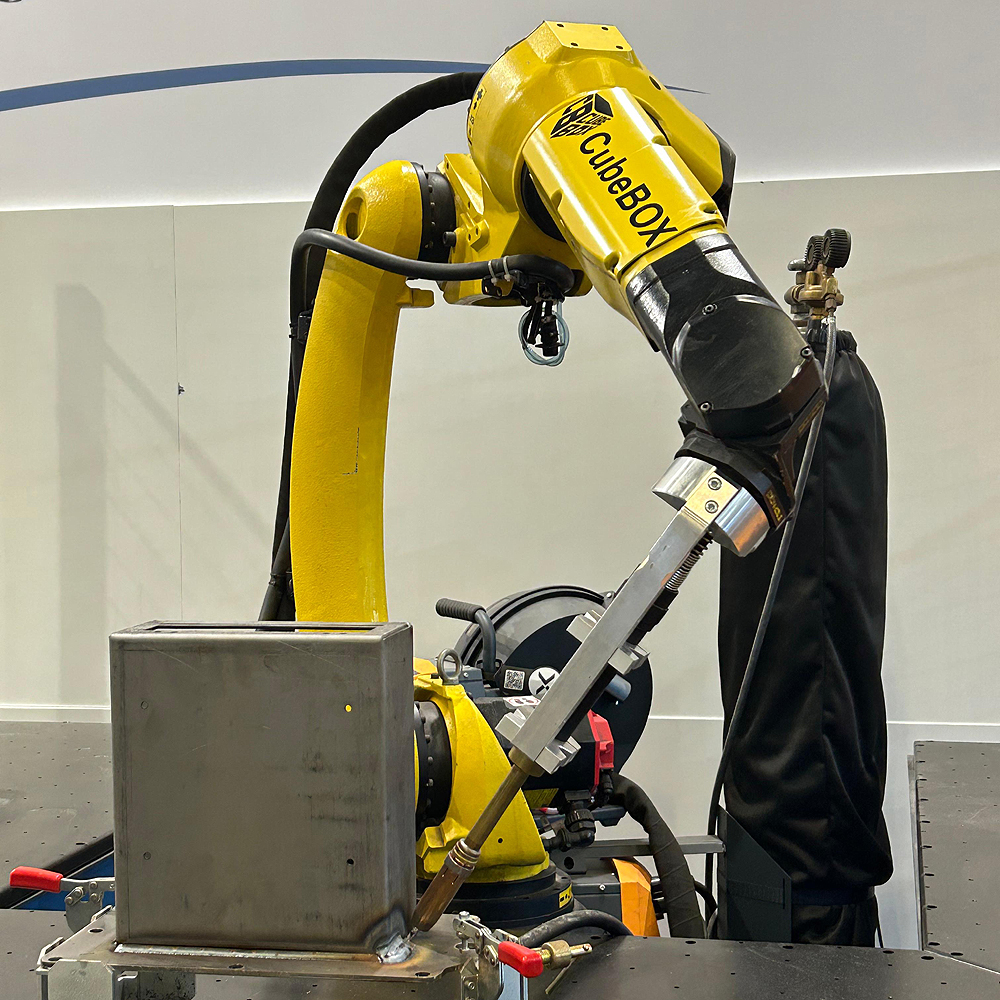
WeldBOX-L
WeldBOX
WeldBOX-L
Robotic Laser Welding Systems
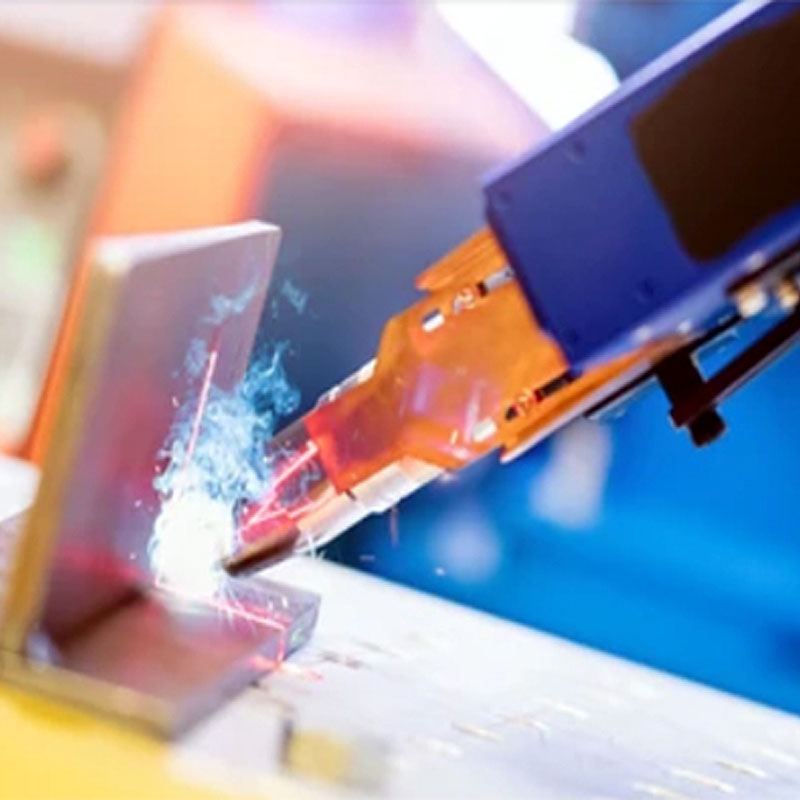
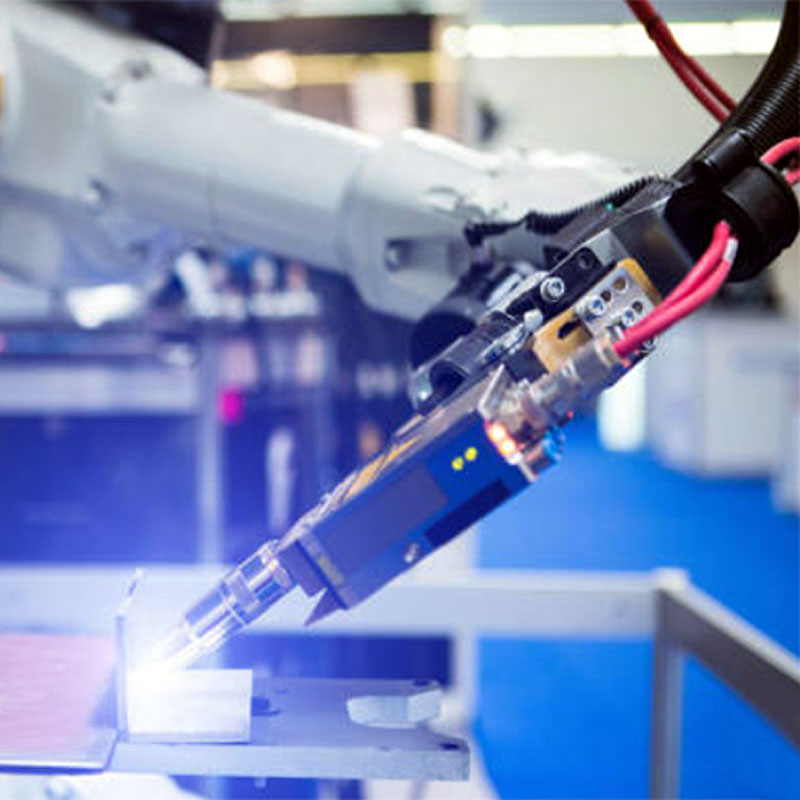
- WeldBox-L Robotic Laser Welding Systems are advanced processes that combine the advantages of laser welding with the precision and automation of robotic technology. They offer high-precision welding capabilities and reduce job completion time without sacrificing quality.
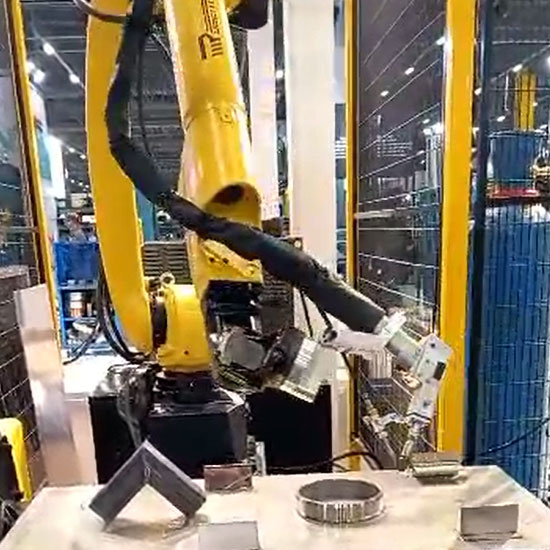
- The laser welding robot cell optimizes the workforce and increases quality standards by automating the welding process.
- Automation and fast welding capabilities provide more efficient production and save time and costs.
- It helps to achieve competitive advantage by minimizing welding errors, increasing production speed and reducing operating costs.
Working
- Laser Production: The laser welding system produces high-energy laser beams.
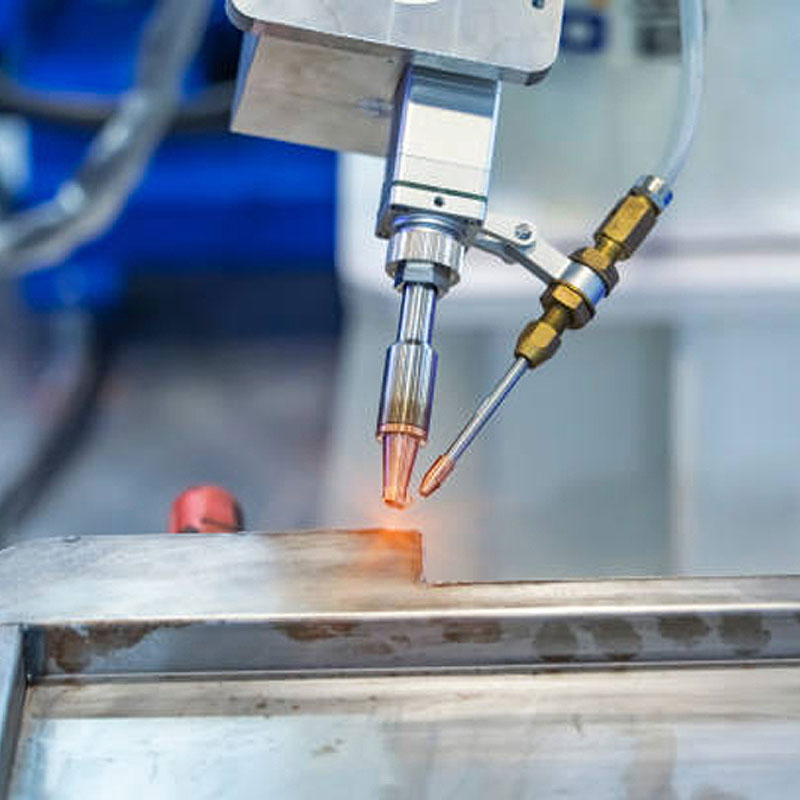
- Focusing: The generated laser beam is concentrated on a specific point through a lens system. This process ensures rapid and effective heating of the material.
- Material Preparation: The materials to be welded are properly placed. This also includes cleaning the joint and ensuring proper positioning.
- Robot Control: The system operates with a control system integrated with the laser source, positioning the robot precisely at the targeted locations by following pre-programmed paths. Advanced sensors and software enable automatic optimization of the process.
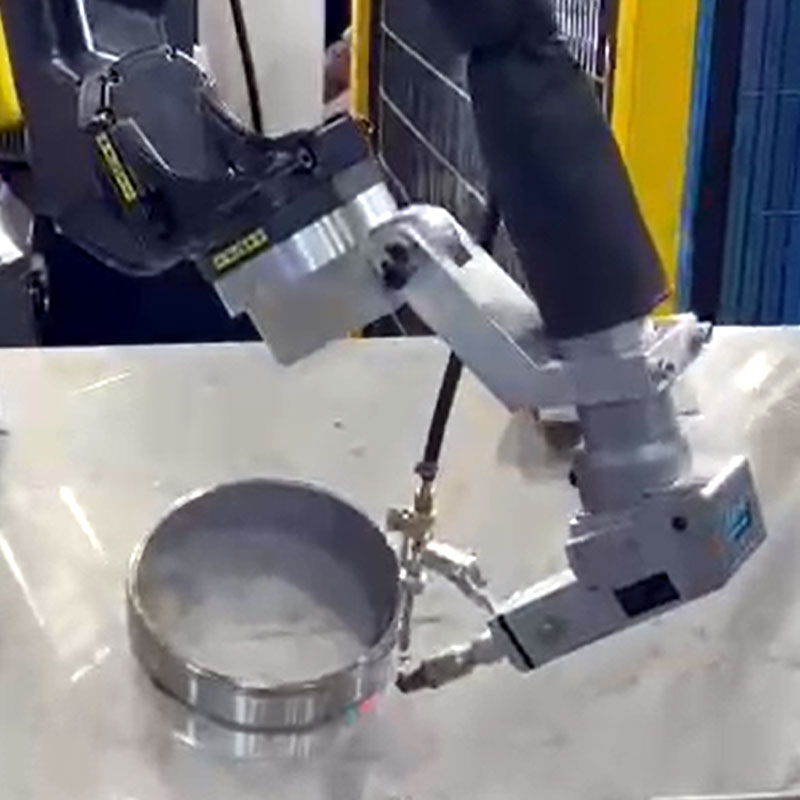
- Welding Process: As the robot moves the laser beam over the material, the high temperature vaporizes the metal and, over time, forms the weld seam. The laser beam melts and joins the materials.
- Final Checks and Results: Once the welding is completed, the work is subjected to quality control processes. The desired tolerances and specifications are checked.
Advantages
- High Precision: It is capable of producing very fine and precise welds using high-intensity energy. This is especially critical when welding small parts.
- Fast Processing Times: Shorter welding processes increase production efficiency and overall productivity.
- Reduced Heat Effect: Since the welding process does not create a large heat effect area, undesirable effects on the material, such as deformation and stress, are reduced.
- Compatibility with Different Materials: It has the ability to work on different types of metals.
- Automation and Repeatability: The system offers automated processes, reducing the risk of human error and ensuring consistent quality reproduction.
- Less Weld Filler: Using less filler material creates fewer weld beads. This not only saves money but also results in a more aesthetically pleasing result.
- Cleanliness and Surface Quality: Improves product quality with smoother weld seams and less surface damage.
- Digital Control and Monitoring: The system is equipped with the ability to digitally control and monitor processes.
- Automotive: Vehicle body construction, chassis assembly, and welding of various components.
- Aerospace: Aircraft construction and component manufacturing requiring high reliability and low weight.
- White Goods: Welding of metal parts for products such as refrigerators and washing machines.
- Construction: Manufacturing of steel structures and other construction elements.
- Energy Sector: Welding applications in renewable energy systems and general energy facilities.
- Robotics and Automation: Assembly and welding of robots and automation system components.
- Defense Industry: Production of vehicles and equipment for air, land, and naval forces.
- Metalworking Industry: Production and assembly of various metal parts.
- Tube and Piping Systems: Pipe welding operations in industrial facilities and infrastructure.
- Consumer Products: Production of electronic devices and other consumer products.
- MIG/MAG
- TIG (GTAW)